Buying guide
Closet tension rods: hanging clothes without brackets, and how much they really carry
A closet tension rod hangs clothes between two solid side walls without brackets, held only by the outward push of its end caps. It works for alcoves and reach-in closets of about 1½ to 7 feet, but clothes are a heavy, constant load and none of the closet rods we compare states a weight rating. Keep the span short, weigh what you hang, and treat “heavy duty” as a sales word.
Disclosure: This page contains affiliate links (marked with *). If you buy through them, we earn a small commission at no extra cost to you. As an Amazon Associate I earn from qualifying purchases. Learn more
The short version
Yes, a tension rod can hold clothes, within limits nobody publishes. The closet rods we compare cover 16 to 84 inches, and none states a load figure. Choose a range that puts your width well inside it, set the caps on flat, solid walls, keep the span short, and weigh an armful of hangers before you trust the rod with a full wardrobe.
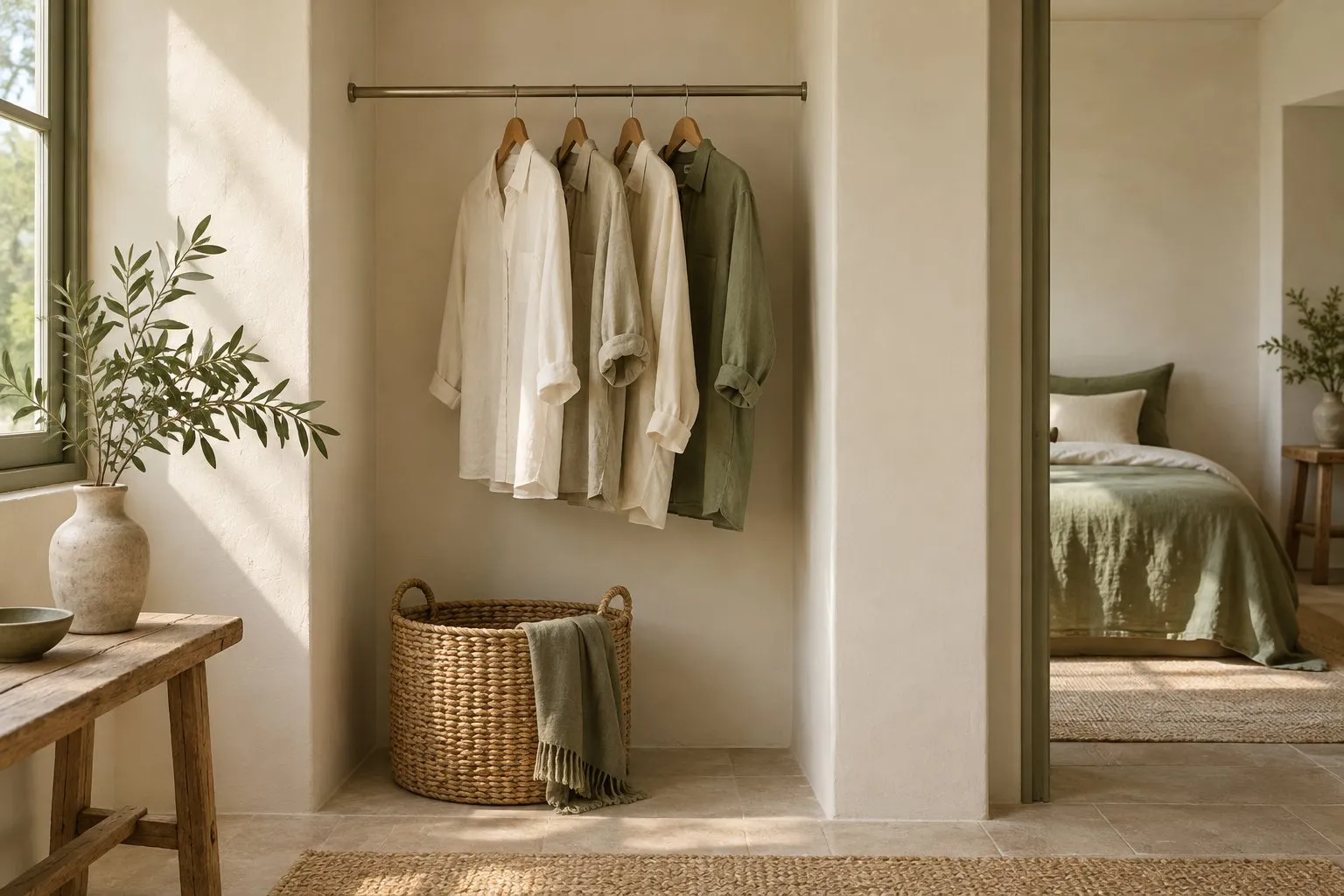
A closet tension rod is the same device as a curtain tension rod: a telescoping tube whose end caps press outward against two opposing walls, with friction at the caps carrying the load. What changes in a closet is the load. A curtain weighs what it weighs and mostly hangs still. A row of coats, jeans and shirts is heavier, grows over time, and gets pushed and pulled every morning.
That matters because of what we did not find. None of the closet tension rods we compare has a manufacturer page, and none states a weight rating in its listing. Most are sold as “heavy duty” or “stepless adjustable”. So this page gives no pick and no badge. It sorts the rods by width range and explains how to get the most out of whichever one you choose.
The closet rods compared
| Comparison | Seller data onlyCloset rod 17–84 in | Seller data onlyCloset rod 17–69 in | Seller data onlyMavivegue closet rod 16.4–84 in | Seller data onlyBlack closet rod 17–69 in | Seller data onlyStepless closet rod 17–84 in |
|---|---|---|---|---|---|
| Width range | 17–84 in | 17–69 in | 16.4–84 in | 17–69 in | 17–84 in |
| Mechanism | Stepless tension | Stepless tension | Tension | Tension | Stepless tension |
| Diameter | Not stated | Not stated | Not stated | Not stated | Not stated |
| Material / finish | Not stated | Not stated | Not stated | Black | Not stated |
| Stated load | Not stated | Not stated | Not stated | Not stated | Not stated |
| Data from | Amazon listing title only | Amazon listing title only | Amazon listing title only | Amazon listing title only | Amazon listing title only |
| Best for | Alcoves and closets where you cannot drill brackets | Narrow closets and alcoves under 6 feet | Closets and alcoves of varying width | Open closets where the rod is visible | A second rod for a double-hang closet |
| On Amazon(paid link to Amazon, opens in a new tab)Ad · paid link · check price & delivery on Amazon | On Amazon(paid link to Amazon, opens in a new tab)Ad · paid link · check price & delivery on Amazon | On Amazon(paid link to Amazon, opens in a new tab)Ad · paid link · check price & delivery on Amazon | On Amazon(paid link to Amazon, opens in a new tab)Ad · paid link · check price & delivery on Amazon | On Amazon(paid link to Amazon, opens in a new tab)Ad · paid link · check price & delivery on Amazon |
All rows come from the Amazon listing titles. “Not stated” means the title gives no figure. Before you order, check on the listing that the rod is meant to be mounted by tension alone; some closet poles are sold with brackets or as dual-mount rods.
Which closet rod reaches your alcove?
Enter the inside width of the opening: jamb to jamb on a window, wall to wall in a shower or closet.
Ranges as stated by the maker or, where marked, the Amazon listing title. Keeping your width away from either end of the range is common advice, not a manufacturer rule.
Two size classes: up to 69 and up to 84 inches
The closet rods on Amazon fall into two groups by their stated range. Both start at about 16 to 17 inches, so the real choice is the upper end. Pick the shorter class whenever your alcove allows it: the same opening then sits further from the end of the range, and the rod has more length in reserve inside the tube.
Closet rods 17–69 in
The 17–69 inch stepless closet pole* and the black 17–69 inch no-drill rod* are the shorter class. For a reach-in closet or a narrow alcove of 3 to 5 feet, they put your width in the middle of the range instead of near its end. Keeping away from the end of the range is common advice for spring and tension rods, not a manufacturer rule, but in a closet it is the one lever you have. The black finish suits open closets where the rod shows.
Closet rods 16.4 or 17 to 84 in
Unbranded
Closet rod 17–84 in
A stepless adjustable closet pole for alcoves of about 1½ to 7 feet.
Seller data only
Best for: Alcoves and closets where you cannot drill brackets
Mavivegue
Mavivegue closet rod 16.4–84 in
An adjustable closet rod from 16.4 to 84 inches.
Seller data only
Best for: Closets and alcoves of varying width
Unbranded
Stepless closet rod 17–84 in
Another stepless closet rod for 17 to 84 inches.
Seller data only
Best for: A second rod for a double-hang closet
The longer class reaches about 7 feet. That is convenient for wide alcoves, but a 7-foot span of clothes on a tension rod is asking a lot of two end caps and an unsupported tube. If your closet is that wide, look at whether you can split it: two shorter rods between a wall and a solid divider, or a double-hang layout with one rod above the other, each at a shorter span. Mavivegue is the only named brand here; we found no manufacturer page for it either.
Why the span matters more than the label
Sag grows with the fourth power of the span. A rod that bows a little at 4 feet bows about four times as much at roughly 5½ feet, under the same load per foot. A thicker tube reduces that sag, but none of these listings states a diameter. And a thicker tube does not add grip: whether the rod slides down depends on how hard the end caps press outward and on the surface they press against.
For curtains, ALLZONE ships a central support bracket only with its longest rod, the 123–160 inch AZ01XL. Clothes are a heavier load per foot than most curtains. That is why, for long closets, a fixed rod on brackets is the honest advice; a tension rod is the renter's solution for short alcoves and reach-in closets. For spans beyond about 8 feet with curtains, see our long tension rod page.
How much will it carry?
Nobody can tell you for these rods. There is no standard load capacity for tension rods. Umbra states 15 lb for its Anywhere curtain rod; Bob Vila reports the makers' own ratings for three tension shower rods as 7, 22 and 30 lb. Those figures belong to those models and say nothing about a closet pole. Our page on how much weight a tension rod can hold explains why the rating depends on the model and the width.
You can find out what you are asking of the rod. Stand on a bathroom scale, then pick up an armful of clothes on their hangers and read the difference. Do that for the whole row and you know your load. Hang it in stages and check after a day whether the rod has crept down or bowed.
Setting up a closet rod so it stays
Measure the alcove
Measure wall to wall at the rod height, in two or three spots, and use the smallest figure. Choose the rod class that puts this width well inside its range.Find solid contact points
The end caps need flat, firm wall on both sides at the same height. Avoid baseboard caps, outside corners and fresh paint. Drywall can show marks from the pressure; plywood or wooden side panels give a firmer seat.Set the force and level the rod
Extend the rod into place as the listing describes, make sure it is under real tension and not just touching, and check that it is level so the hangers do not slide to one end.Load it gradually
Hang the lighter half first, check the next day, then add the rest. If the rod creeps or bows, shorten the span or move the heavy coats elsewhere.
Other uses: coat rails, clothes racks and closet curtains
A tension rod between two walls of an entry niche can serve as a coat rail, and a second, lower rod in a closet can make room for a double-hang layout with shirts above and folded trousers below. The same limits apply: two solid surfaces, a short span, and a load you have weighed. A curtain in front of an open closet is the lightest job of all; for that, an ordinary window rod from our best tension curtain rods comparison is enough.
Common mistakes
- Using an 84-inch rod at 80 inches with a full winter wardrobe.
- Setting the caps on a door frame's rounded trim instead of the flat wall.
- Hanging the heaviest coats in the middle of the span, where the sag is greatest.
- Pulling hangers off with a jerk every morning. That moves the rod a little each time.
- Expecting walls to stay unmarked. Pressure sits on two small pads, and soft surfaces such as drywall or fresh paint can show marks.
If the rod keeps coming down, the cause is usually the surface, the range or the load; our guide to why a tension rod keeps falling goes through each one. For thick, locking rods built for curtains, see our heavy-duty tension rod page.
Rod finder
Question 1 of 4
Where does the rod go?
A tension rod needs two solid, opposing surfaces.
Summary
A closet tension rod is a good fix for a short alcove or reach-in closet where you cannot drill. Choose the 17–69 inch class for spans up to about 5 feet and the 84-inch class only when you need the length. We found no maker data and no load rating for any of these rods, so measure carefully, weigh what you hang and keep the span as short as the closet allows.
Questions people ask
Is a tension rod strong enough to hold clothes?
It can be, but no closet tension rod we compare states how much. Clothes weigh more than most curtains and the load never comes off. A short span, a width well inside the rod's range and two flat, solid walls make the difference. Weigh what you plan to hang and add it gradually, checking whether the rod creeps down or bows.
How far can a closet rod span without support?
For tension rods we found no maker figure. The physics are clear, though: sag grows with the fourth power of the span, so about 41 percent more length means about four times the sag. For curtains, ALLZONE ships a central support bracket only with its 123–160 inch rod; for clothes, which are heavier, keep the span much shorter and use a fixed rod with brackets for long closets.
What is the best heavy duty closet tension rod?
We cannot name one with a source. All closet rods in our comparison are sold under “heavy duty” or similar wording without a load figure, a diameter or a manufacturer page. Compare them by width range and choose the one where your alcove sits comfortably inside the range rather than at its end.
Can I use a tension rod for closet curtains?
Yes. A curtain in front of an open closet or alcove is a much lighter job than hanging clothes, and an ordinary window tension rod in the right range will do. Our best tension curtain rods page sorts window rods by width.
Sources
- ALLZONE: curtain rod collection, AZ01XL 123–160 in with central support bracket (read 22 Oct 2026)
- Umbra: Anywhere curtain rod, max capacity 15 lb (product page, read 22 Oct 2026)
- Bob Vila: The Best Shower Curtain Rods, manufacturer ratings of 7, 22 and 30 lb (updated 28 Jan 2026)
- Wikidata: curtain rod (Q3123809)
Keep reading
- Buying guideHeavy-duty rods“Heavy duty” on a tension rod is a sales word, not a rating. What to check instead – diameter, lock, stated load and span – plus our pick for wide windows.
- Question & answerHow much weight can a tension rod hold?There is no standard load capacity for tension rods. What manufacturers actually state, from 7 to 30 lb, why width matters, and how to check your own curtain.
- TroubleshootingRod keeps fallingA shower or window tension rod that keeps falling usually has a surface, force or load problem. Find the cause, fix it step by step, and know when to replace it.
- ExplainerRod sizesTension rod sizes explained: measure the inside width three times, pick a range that covers the smallest figure, and what 5/8 to 1.25 inch diameters mean for sag.
- Buying guideLong rodsLong tension rods reach about 13.75 feet in listings, but sag grows with the fourth power of the span. When a long rod works, when it needs support, and our pick.
Who researches this
tensioncurtainrod.com Editorial Team
Tension rods for windows, showers and closets
We are the editorial team at tensioncurtainrod.com. We compare what rod makers actually publish – width ranges, mechanisms, materials, warranty wording and the rare load rating – with what listings and AI answers claim, and we say where the two disagree. We do not run lab tests, and we say so openly.
- Manufacturer pages & warranty wording read
- Seller-only data labeled
- No lab tests – stated openly
- Publisher details in the imprint